Below, you will find the regulations that form the basis of pilotage inspections in Danish waters.
Get a fast overview of the regulations in this flowchart

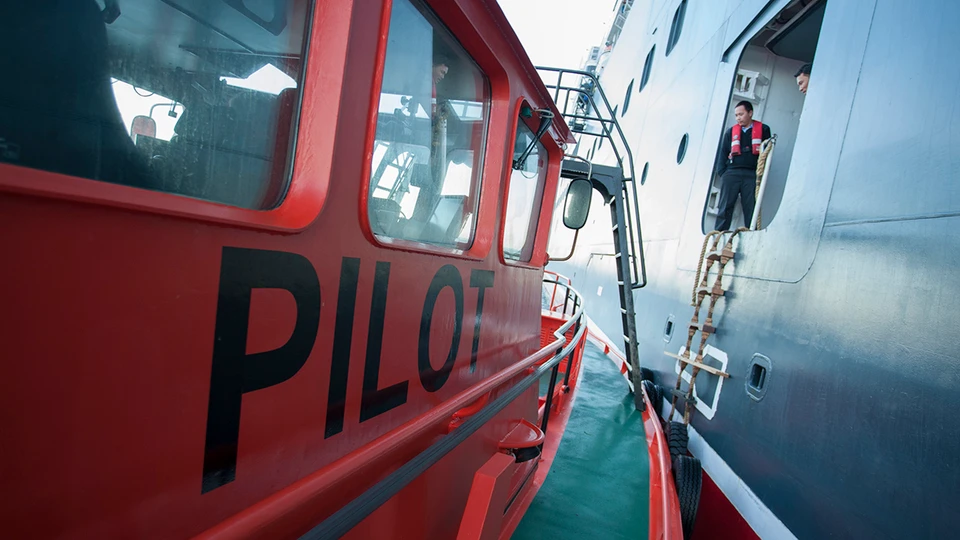
As regards safety of navigation in Danish and Greenland waters, a number of mandatory pilotage regulations apply.
Below, you will find the regulations that form the basis of pilotage inspections in Danish waters.
Get a fast overview of the regulations in this flowchart
You can also find answers to frequently asked questions in our FAQ.
Danish Pilotage Act Section 4.
In internal and external territorial waters there is an obligation for ships to use a pilot if they
According to UNCLOS art. 17 and 18, all ships enjoy the right of innocent passage through the territorial sea.
Right of innocent passage
Subject to this Convention, ships of all States, whether coastal or land-locked, enjoy the right of innocent passage through the territorial sea.
Article18
Meaning of passage
However, according to SN.1/Circ. 263 of 23 October 2007 section 1.9 and 1.14 amendments to the recommendations on navigation through the Entrances to the Baltic Sea the IMO recommends use of pilot from Skagen to Gedser and vice versa for ships with a draught of 11 metres or more following Route T on their voyage through the Entrances to the Baltic Sea. The IMO Sailing Direction expresses an international acknowledgment of the fact that the Entrances to the Baltic Sea are congested and difficult to navigate.
The Danish Pilotage Authority would like to point out that international consensus on recommending use of pilot was achieved owing to the risk of groundings or collisions of large ships navigating through Danish waters. Between Gedser and Spodsbjerg, the effect of sea level variations caused by a combination of tide and meteorological conditions together with unknown obstructions on the seabed and sand migration could decrease the depth with as much as 2 metres. The area is difficult to navigate due to the heavy traffic in the area of the Kadetrenden and due to the fact that sand migration is constantly narrowing the manoeuvring space of deep draught vessels.
Therefore, the Danish Pilotage Authority highly recommends that a ship with a draught of 11 metres or more uses the pilotage services established by the coastal State on its passage from Grenaa to Gedser. ‘
In addition, ships with a draught of 13 metres or more will be reported to the flag state, if they do not take a pilot all the way from Gedser to the Skaw (adding the part from Grenaa to the Skaw), attributable to the fact that the increase in draught intensifies the risk of the ship running aground significantly in the remaining part of the waters.
The Danish Pilotage Authority reports all violations of the IMO recommendation to the flag state.